Yes, a child can change school during the school year in France, from nursery to middle school. To move to a private school you need three things: a place at the new school, a deregistration certificate (certificat de radiation) from the old one, and a short file with your child’s identity documents, proof of compulsory vaccinations and, for older children, recent school reports. At Forest International School Paris, an English-language school in Mareil-Marly for children aged 2 to 15, applications are considered all year and children can start from November 2026.
Version française : changer d’école en cours d’année.
Families change school mid-year for many reasons: a move, a school that no longer suits the child, or a school that announces it is closing. In that last case, many families start looking at the same time, often at the same schools, so it helps to begin before the holidays rather than after.
The steps, in order
The French government’s Service Public guidance sets out one principle: a mid-year enrolment always depends on a place being available at the new school. Private schools each set their own admission conditions, but the order of the steps is the same everywhere.
| Step | What you do | Good to know |
|---|---|---|
| 1. Find a place | Contact the schools you are considering and visit with your child | Ask about places in your child’s exact year group, not just in the school overall |
| 2. Prepare the file | Gather your livret de famille (the French family record book) or your child’s birth certificate, proof of the compulsory vaccinations for your child’s age, and the latest school reports | For a middle-school pupil, also bring last year’s termly reports, the décision d’orientation (the school’s end-of-year decision on which class your child moves up to) and proof of address |
| 3. Ask for the deregistration certificate | Once the new place is confirmed, tell the old school, which issues the certificat de radiation | In middle school this document is called the exeat, according to the official page on changing collège mid-year |
| 4. Complete the enrolment | Hand the full file to the new school | At primary level, if the two parents disagree, the head must wait for a family court decision |
If your child’s school is closing, do not wait until the last week to request the deregistration certificate and copies of this year’s reports. Ask in writing while the office team can still be reached: these documents can be harder to obtain once a school has shut.
For a French state nursery or primary school, the process starts at your local town hall (mairie), which issues an enrolment certificate naming the school. Paris also has state schools with a bilingual label in English, Spanish or German; they take only children who live in their catchment area.
November, January or September: choosing the moment
If your child’s school is closing, the real question becomes when your child starts somewhere new.
Across mainland France, the 2026 Toussaint half-term starts on Saturday 17 October after school, and classes resume on the morning of Monday 2 November, according to the official school calendar. Starting straight after a holiday lets your child begin a new half-term with the class, rather than mid-way through one. January has the same advantage, with a few more weeks to visit and decide. September remains an option if your child’s current school stays open until the end of the year.
At Forest, children can start from November 2026, and there are places in every year group, from nursery to middle school (as of October 2026). The school does not operate a waiting list.
If your child is between 2 and 12, our Toussaint holiday camp can serve as a first week on campus. It runs from 19 to 23 October 2026, 10:00 to 16:00, at 450 € per week, with meals at 40 € per week (prices as of October 2026). Camps are open to children who do not attend Forest, and transport is available on request from Saint-Germain-en-Laye, Le Pecq and Paris 16.
Coming from a bilingual school: what changes at Forest
If your child is coming from a French-English bilingual school, Forest works differently: teaching is in English, and French is a subject taught every week. This table helps you judge the gap for your child.
| At Forest International School Paris | The question to ask yourself | |
|---|---|---|
| Language of teaching | English, following the English National Curriculum | Does your child already spend much of the school day in English? |
| Curriculum | English National Curriculum and International Primary Curriculum in Primary (ages 6–11); English National Curriculum and IMYC in Middle School (ages 11–15) | Might your child return to the French system later? |
| French | 4.5 hours a week in Early Years, 6.5 hours in Middle School; in Primary, French as a foreign language or for native speakers, with preparation for Alliance Française tests | Does your child need to keep up a high level of written French? |
| English support | ESL is available in Primary; language support (FLE / EAL / LSS) is charged separately, as shown on the fees page | What is your child’s level of English today, spoken and written? |
| Class size | A maximum of 15 pupils in Primary; in Early Years, a maximum of 5 children in the younger group and 11 in the older group | Does your child need a smaller setting to rebuild confidence? |
| School day | Lessons 8:45–15:45; optional breakfast club from 8:00, after-school club until 17:00 and late care until 18:00 | Do these hours work with the journey and your working day? |
| Additional needs | In Primary, specialist support is available for children with ADHD, dyslexia and other conditions | What support does your child receive at the moment? |
If you want to keep the French national curriculum alongside English in equal measure, a 50/50 bilingual school or a bilingual state school will meet that need better. We would rather say so before your visit: a mid-year move is already a lot for a child, and it should not lead to a second one a few months later. To compare English-language and bilingual schools in Paris and west of the city, our guide to English pre-elementary and primary schools sets out the main options.
From Paris 15: the journey and the school bus
Forest is at 28 Rue de Tour d’Echelle in Mareil-Marly, in the Yvelines, near Saint-Germain-en-Laye. For families living in the 15th arrondissement or the neighbouring communes, the journey is often the first question.
As of October 2026, the school’s door-to-door bus serves Paris 15. Its price, from 4,850 € to 9,850 € depending on the pick-up address, is listed on the tuition page. For the 16th arrondissement or a neighbouring commune such as Boulogne-Billancourt or Issy-les-Moulineaux, ask the team whether your address is covered before relying on it.
If you would rather drive, try the route on a weekday at your real departure time, around 8:00, and again at pick-up time. The optional breakfast club from 8:00 and late care until 18:00 give some margin to parents who work in Paris.
Joining Forest mid-year, in practice
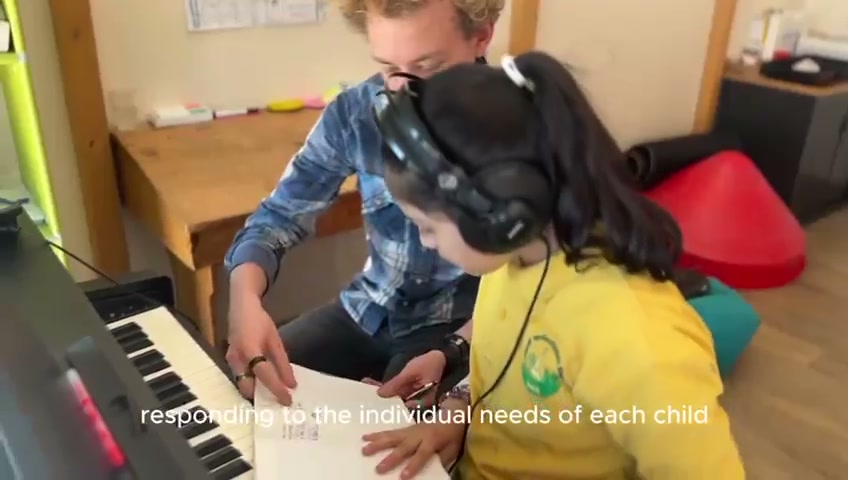
A mid-year application follows the same four steps as a September one, set out on our admissions page:
- The application form, to register your interest.
- A visit: in person, by video call, or at the Open House on Saturday 5 December 2026, 10:00 to 13:00.
- The application file, with the requested documents, if the school is the right fit.
- Confirmation of the place: a member of the admissions team guides you through each step.
There is no birthday cut-off. For children who join during the school year, tuition is pro rata to the time remaining, and a reduction may be possible: the admissions team will give you the exact amount for your situation. The annual fees are published on the fees page.
In Primary, a new pupil joins a class of 15 at most, with a class teacher who teaches all the academic subjects. Classes are multi-level and each child progresses at their own pace, so a pupil who arrives in November joins a group where not everyone is at the same point. From April to November, swimming lessons take place twice a week with the sports teachers in the covered, heated pool on campus. In spring, the class goes biking and on long outings in the forest.
“At first, children are a little shy. Because our classes are small, teachers can follow each child’s development and help them find confidence in their new surroundings, both in their learning and in making friends.”
Sophie Lovejoy, Principal, Forest International School Paris
Helping your child through the first weeks
- Explain the change early, in simple, honest words, and tell your child what stays the same: family, activities, and the friends they can still see.
- Visit together before the first day. Seeing the classroom, the playground and the journey makes the first Monday far less abstract.
- Keep in touch with one or two friends from the old school, especially if several families are moving to different schools.
- For younger children, use the flexibility of Early Years: children can attend half or full days, and we recommend at least three half days a week.
Frequently asked questions
Can a child change school during the school year in France?
Yes. Service Public confirms it for nursery and primary school, and the process also exists for middle school. In every case, enrolment depends on a place being available at the new school, and the old school issues a deregistration certificate.
What should I do if my child’s school is closing mid-year?
Ask quickly, in writing, for the deregistration certificate and this year’s reports. Then contact several schools in parallel, private or state. For a state nursery or primary school, go to your local mairie; for a state middle school, contact the collège in your catchment area, or the local education authority (DSDEN) if it has no place.
My child speaks little English. Can they join Forest mid-year?
In Primary, ESL support is available. In Primary and Middle School, language support (FLE / EAL / LSS) is charged separately and listed on the fees page. The visit is the moment to assess your child’s level with you and the support they would need.
Does the school bus serve Paris 15?
Yes: as of October 2026, the school bus serves Paris 15, door to door. The price depends on the pick-up address; the range is published on the fees page.
Is tuition charged for the whole year if my child starts in November?
No. For children who join during the school year, tuition is pro rata to the time remaining, and a reduction may be possible. The admissions team will give you the exact amount.
When can my child start at Forest?
From November 2026. As of October 2026, there are places in every year group, and applications are considered all year with no waiting list.
Next step
The most useful thing is to see the campus with your child: book a visit, and the team will show you your child’s future class and explain what a November start means for your family.