If you are looking for an English school in Paris for a pre-elementary or elementary child, compare four things first: the age your child can start, the language model, the curriculum path after age 5, and whether the daily commute works from your part of Paris or west Paris. Forest International School Paris is one option for families looking west of the city: our Early Years welcome children aged 2-5, our Primary School welcomes ages 6-11, and both are taught in English on our campus in Mareil-Marly, near Saint-Germain-en-Laye.
Version française : École anglaise à Paris : maternelle et primaire.
By pre-elementary, most families mean Nursery, Pre-School, Pre-K, Kindergarten or Maternelle: the years before formal primary school. Elementary is often called Primary in British and international schools, and it usually covers ages 6-11. The names vary, so the important question is not the label on the brochure. It is whether the school has the right class for your child’s age, language profile and next move.
English school options for younger children in Paris
The schools below are among the options families commonly compare for English-language or French-English education in and around Paris. Public information was checked in July 2026, but fees and availability change, so use this as a shortlisting tool before speaking to admissions teams.
| School | Area | Relevant ages | Language and curriculum | Fee signal checked in July 2026 | Strong fit if… |
|---|---|---|---|---|---|
| Forest International School Paris | Mareil-Marly, west of Paris | 2-11 for Early Years and Primary | English-language school; English National Curriculum with IPC in Primary; French included | Our tuition page lists annual tuition lines from 12,500 EUR to 19,000 EUR across Pre-School, Early Years, Lower Primary and Upper Primary, with other fees shown separately | You want a smaller English-language school, regular forest learning and a west Paris campus |
| International School of Paris | Paris 16e | Nursery to Grade 5 | English-language IB Primary Years Programme | Public fee page lists Nursery-Pre-K at 25,500 EUR, Kindergarten at 31,100 EUR and Grades 1-5 at 31,400 EUR | You want an IB path in central-west Paris |
| American School of Paris | Saint-Cloud | Ages 3-10 for Early Childhood and Lower School | Fully English-speaking early years; American curriculum with French included | Public fee page lists K3-K5 at 25,000 EUR and Grades 1-5 at 34,600 EUR, plus annual and first-year fees | You want an American curriculum and a large international campus |
| ICS Paris | Paris 15e | Ages 3-10 for Nursery/Pre-K/Kindergarten and Grades 1-5 | English-language IB school | Public fee page lists Nursery/Pre-K/Kindergarten at 20,994 EUR and Grades 1-5 at 24,759 EUR, plus new-student fees | You want an IB school inside Paris 15 |
| Marymount International School Paris | Neuilly-sur-Seine | Ages 2-11 for Early Years and Elementary | International Catholic school, English-language programme with French present in school life | Public fee schedule lists Early Learners from 23,250 EUR, Kindergarten at 34,000 EUR and Elementary at 34,400 EUR | You want a Catholic international school in Neuilly-sur-Seine |
| Kingsworth International School Paris | Paris campuses | Ages 2.5-11 for Early Years and Primary | English-speaking and bilingual school; English and French present | Public fee page lists Early Years from 15,900 EUR and Primary at 16,600 EUR | You want a smaller Paris-based bilingual or English-speaking route |
| The British School of Paris | Croissy-sur-Seine | Ages 3-11 for Foundation Stage and Junior School | British-style education; EYFS and British curriculum path | Public fee page describes an inclusive 2025-2026 fee and annual fee list; confirm the current Junior School figure directly | You want a long British pathway through GCSE and A Level |
| EIB bilingual schools | Paris and west Paris campuses | From age 3 in nursery and primary schools | French-English bilingual education, often following French National Education programmes with English time | Fees vary by campus and school year; published campus schedules should be checked directly | You want a 50/50 French-English bilingual model rather than an English-led model |
How Forest compares by aspect
Parents often ask whether a smaller school outside central Paris can compare with larger schools in Paris 15, Paris 16, Saint-Cloud, Neuilly-sur-Seine or Croissy-sur-Seine. The answer depends on the child.
| Aspect | At Forest International School Paris | What to compare elsewhere |
|---|---|---|
| Starting age | Early Years starts from age 2, with Nursery and Pre-School for ages 2-5 | Some schools start at age 3, while others offer age 2 or 2.5 entry |
| Primary age range | Primary School is for ages 6-11 | Check whether Grade 1 starts at age 5, 6 or 7, especially if moving between US, UK and French systems |
| Class size | Published programme details show a maximum of 5 students for the younger Early Years group and 11 for the older Early Years and Primary groups | Ask for actual class size in your child’s year, not only the school average |
| Curriculum | Primary combines the English National Curriculum with the International Primary Curriculum | Compare British, American, IB PYP and French bilingual paths |
| French | English is the teaching language and French is part of the programme; Early Years includes 4.5 hours of immersive French each week | Ask whether French is foreign-language French, native-level French, bilingual instruction or a daily subject |
| Outdoor learning | Children learn on a forest campus in Mareil-Marly, with forest and gardens used as part of school life | Ask whether outdoor learning is daily, weekly, seasonal or mainly recreational |
| Specialist lessons | Early Years includes specialist teachers for Music, Sport and French; Primary includes language support, technology, swimming and outdoor activities | Ask which subjects are taught by the class teacher and which by specialists |
| Admissions | Admissions are open year-round, with visits, virtual meetings and Open Days | Ask about testing, waiting lists, mid-year entry and the documents needed before a place can be confirmed |
| Fees | Forest publishes tuition and additional fees on one fees page, including cantine, bus, breakfast club and after-school club where relevant | Compare the first-year total, not only annual tuition: application, registration, capital, lunch, bus and learning-support fees can change the total |
| Location | Forest is in Mareil-Marly, near Saint-Germain-en-Laye, west of Paris | Compare real morning and afternoon routes from your home, not only the distance on a map |
West Paris and Yvelines areas to include in your search
Families do not always search by the school’s town. They search from home, a future address, a RER station, or a place they already know. If you live west of Paris, widen the map around Mareil-Marly and Saint-Germain-en-Laye before assuming you need to choose a central Paris school.
| If you live near… | Useful way to think about the search | Forest angle to check |
|---|---|---|
| Mareil-Marly | English pre-elementary school Mareil-Marly, English primary school Mareil-Marly | Forest is located in Mareil-Marly itself, at 28 Rue de Tour d’Echelle |
| Saint-Germain-en-Laye, Fourqueux or Chambourcy | English preschool near Saint-Germain-en-Laye, English primary school Saint-Germain-en-Laye | Forest is near Saint-Germain-en-Laye and can be visited before applying |
| L’Étang-la-Ville, L’Etang-la-Ville or Marly-le-Roi | Pre-elementary school L’Étang-la-Ville, English school near Marly-le-Roi | It is worth checking nearby Mareil-Marly rather than limiting the search to one commune |
| Le Pecq, Le Port-Marly or Le Vésinet | English nursery or primary school west of Paris | Compare commute rhythm, after-school options and whether a forest campus suits your child |
| Louveciennes, Bougival or La Celle-Saint-Cloud | English primary school near Bougival, bilingual school La Celle-Saint-Cloud | Compare English-led schools with French-English bilingual schools |
| Croissy-sur-Seine, Chatou or Maisons-Laffitte | English elementary school Yvelines, British school west Paris | Compare British-pathway schools with smaller English-language schools |
| Versailles, Bailly, Noisy-le-Roi or Saint-Nom-la-Bretèche | International primary school Yvelines, English preschool near Versailles | Visit the campus and test the route at the time you would actually drive |
| Paris 16, Neuilly-sur-Seine or Saint-Cloud | English school Paris west, international preschool Paris west | Compare central-west Paris and nearby western-suburb campuses by daily logistics |
This local step matters for younger children. A three-year-old’s school day is shaped by sleep, separation, food, toilet independence and travel. A primary child may manage a longer route if the school is the right academic and social fit. For a pre-elementary child, a calm morning can matter as much as curriculum language.
If your search takes in older children too, our guide to English and international schools west of Paris maps the same area across the full 2 to 15 age range, with the main towns and the different types of school you will meet.
What a younger child’s school day should show you
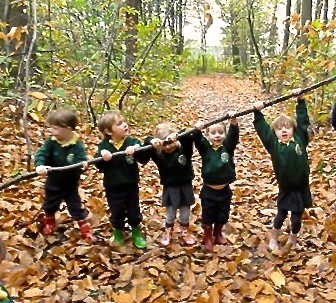
When families visit Forest, we want them to see the link between the classroom and the outdoor environment. In Early Years, children need security before independence. They need adults who know when to help, when to step back and when a child has simply had enough for the morning.
In our forest mornings at Mareil-Marly, the youngest children practise language through real situations: finding leaves, noticing weather, waiting for a turn, listening to instructions, helping a friend and telling the group what they have seen. That experience does not replace early literacy or numeracy. It gives those skills a concrete place to grow.
For Primary children, the question changes. Parents want to know whether English reading, writing and mathematics are taught with enough structure. They also want curiosity, science, history, geography, art, music, sport and enough movement in the week. Our Primary programme combines the English National Curriculum with the IPC, so children build academic foundations while working through thematic units and hands-on projects.
Fees: compare the full first-year cost
For any English school in Paris, tuition is only part of the decision. A first-year invoice may include an application fee, registration fee, capital or development fee, lunch, transport, English-language support, learning support, after-school activities and trips.
At Forest, current fees are published on tuition. As of July 2026, the page lists tuition separately from development, cantine and optional extras. It also explains that cantine includes organic lunches and snacks, with no charge for children bringing a lunch box. Optional extras include breakfast club, after-school clubs and bus service, depending on what a family needs.
When you compare schools, make a simple family spreadsheet with these columns:
- Application and registration fees
- First-year capital or development fee
- Annual tuition by age or grade
- Lunch or cantine
- Bus or shuttle
- After-school care
- Learning support or English/French support
- Payment schedule and refund rules
Then compare the total for your child’s actual entry year. A school that looks less expensive on tuition may be similar after extras. A school with higher tuition may include books, activities or trips that another school charges separately.
Which type of school fits which child?
Choose an English-led school if your family needs English as the main academic language and expects a future move into another English-speaking or international system. This often fits relocating families, bilingual families with English at home, and children who need continuity after a move from another country.
Choose a French-English bilingual school if your child needs strong integration into French academic language and you want both languages to carry a large part of the week. This can fit families staying long term in France or planning a later move into a French collège or lycée.
Choose an IB PYP school if you want an inquiry-based international framework with a recognised IB path. Choose an American curriculum if you want continuity with US grade structures. Choose a British curriculum if you want EYFS, Key Stages, GCSE and A Level continuity.
For some children, the decisive factor is none of those labels. It is the size of the class, the adult-child relationship, the school grounds, the commute, or whether siblings can be educated together. That is why a visit matters.
Questions to ask before applying
Bring the same questions to each school, then compare the answers the same day.
- Which class would my child enter, and why?
- How many children are currently in that class?
- What does the first month look like for a new child?
- How is English assessed for non-native speakers?
- How is French taught to non-francophone and francophone children?
- What happens outdoors each week?
- Which fees are compulsory in the first year?
- Are applications open for our timing?
- Can we visit during a normal school day?
Forest’s admissions page explains the year-round process, and families can contact us to book a visit.
FAQ
What is a pre-elementary school in Paris?
A pre-elementary school usually means the years before primary or elementary school: Nursery, Pre-School, Pre-K, Kindergarten or Maternelle. At Forest International School Paris, this stage is covered by Early Years for children aged 2-5.
Is there an English pre-elementary school near L’Étang-la-Ville?
Forest International School Paris is in nearby Mareil-Marly, west of Paris. Families searching for an English pre-elementary school near L’Étang-la-Ville, L’Etang-la-Ville, Marly-le-Roi or Saint-Germain-en-Laye can visit Forest to see whether the Early Years programme is the right fit.
Does Forest offer elementary or primary school?
Yes. Forest’s Primary School is for children aged 6-11. It combines the English National Curriculum with the International Primary Curriculum and is taught in English, with French included in the programme.
Should we choose an English school or a bilingual school?
Choose based on your child’s next likely school system and language needs. An English-led school can suit families needing English academic continuity. A 50/50 bilingual school can suit families prioritising French-English balance and a stronger link to the French system.
Are English schools in Paris expensive?
Private English-language and international schools in Paris often charge annual tuition plus first-year and optional fees. Published July 2026 figures for the schools researched here range widely by school, age and included services. Always compare the full first-year cost, not tuition alone.
Can we apply during the school year?
At Forest, applications can be submitted throughout the school year and admissions can advise on availability. Other schools vary: some accept year-round applications when places are available, while others advise applying early for September entry.
What should we do after comparing schools online?
Visit your shortlisted schools. For younger children especially, the feel of the classroom, the adults, the outdoor space and the commute will tell you things no comparison table can.
Next step
If you are comparing English pre-elementary and primary schools in Paris or west Paris, start with your child’s age, language profile and daily route. Then come and see the school in person. You can read about Early Years, Primary School, admissions, or book a visit with Forest International School Paris.