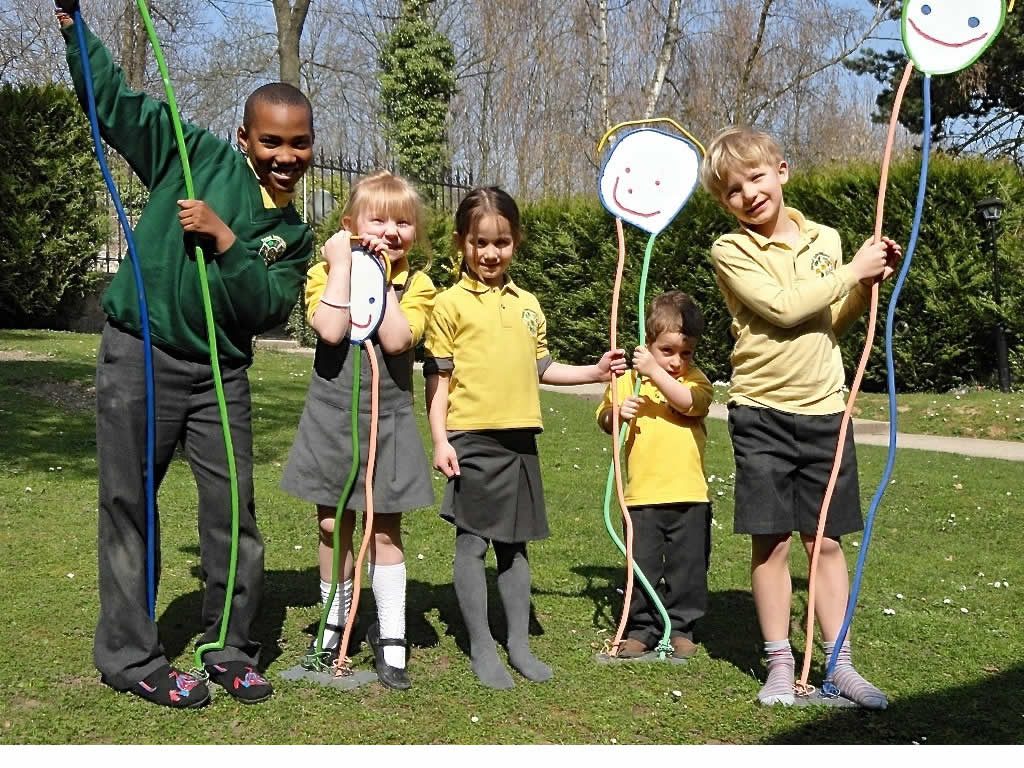
If you are looking for an English-language or international school to the west of Paris, most of the options sit in one department: the Yvelines (78). It stretches from Saint-Germain-en-Laye out towards Poissy and Versailles, and it is where families who work in La Défense or central Paris often settle when they want more space, greener surroundings and an English-speaking education for their children. Forest International School Paris is one of those schools. We have taught here, in Mareil-Marly, since 2003, and this guide is the map we wish more parents had when they started their search.
The towns to know
English and international education west of Paris clusters around a handful of towns, most of them a short drive or RER ride from one another:
- Saint-Germain-en-Laye: the anchor of the area, home to the well-known Lycée International with its national language sections, including English.
- Mareil-Marly: a quiet town on the edge of the Forêt de Marly, where our own campus sits, a few minutes from Saint-Germain-en-Laye.
- L’Étang-la-Ville, Marly-le-Roi and Le Pecq: small residential towns in the same pocket, within easy reach of the same schools.
- Croissy-sur-Seine and Le Vésinet: British-curriculum options sit a little further along the RER A.
- Maisons-Laffitte and St Nom la Bretèche: bilingual and Montessori options can be found here too.
The practical point is that “west of Paris” is not one catchment. A ten-minute difference in where you live can change which schools are a sensible daily commute. It is worth drawing a circle around your home or workplace before you fall for any single school.
How the options actually differ
Schools in this area are not interchangeable, and the labels can be confusing. Broadly, you will meet four types:
| Type of school | Language of teaching | Typical shape |
|---|---|---|
| French school with international sections | Mostly French, with hours in the section language | Large, selective, follows the French system |
| Bilingual school | Split French / English across the week | Varies widely by school and by year group |
| English-curriculum school | English, French taught as a subject | Follows the English National Curriculum or IB |
| International (IB) school | English | Larger, ages usually 3–18, IB programmes |
Forest sits in the English-curriculum group. We follow the English National Curriculum, delivered through Pearson’s international standards, with French taught every day, as a foreign language for children who are new to it, and alongside the French curriculum for native speakers. That daily-French detail matters more than families expect: a child can arrive with no French and still take it seriously as a subject, rather than losing it entirely.
Choosing by your child’s age
The right school at three is rarely the right question to ask at eleven. It helps to think in the same age bands most schools here use.
Early years (ages 2 to 5). At this stage you are choosing an environment, not a curriculum. Look at how much time children spend outdoors, how they are settled in the mornings, and how many adults are in the room. Our early years are split into a younger group (2 to 4) and an older one (4 to 5), and the youngest classes are deliberately tiny so that a two-year-old is never lost in a crowd. You can see how we structure this on our early years page.
Primary (ages 6 to 11). Here the curriculum starts to matter. Ask who teaches your child and how consistently. In our primary years each class has one teacher responsible for all academic subjects, which means someone knows your child’s reading, their maths and their worries as one picture rather than six. Classes are capped at eleven children.
Middle school (ages 11 to 15). This is where children need to become more independent without being thrown in at the deep end. Our middle school combines the English National Curriculum with the International Middle Years Curriculum, and keeps the project-based, outdoor thread running rather than dropping it the moment secondary work begins.
What a smaller school can offer
Much of the west-of-Paris landscape is made up of large, long-established institutions, and for some families that scale is exactly right. It is worth knowing what the smaller end of the spectrum looks like too, because it is a genuinely different experience.
At Forest, classes are capped at eleven children, and smaller again for the youngest. Our campus sits inside the boundary of the Forêt de Marly, and we use the forest as an extension of the classroom all year round, not as an occasional treat but as a weekly part of how children learn. We have been part of the Forest School movement for over twenty years. None of that makes us the right school for every child, and we would rather tell you that plainly than oversell it. A large IB school with a sixth form and a swimming pool answers a different need than a small forest campus does.
The practical questions parents actually ask
Commute. Test it at 8am on a school day, not on a quiet Sunday. The RER A and the daily traffic around Saint-Germain-en-Laye change the map considerably.
Fees. This is where the area gets opaque, because many schools ask you to enquire before they will name a number. We publish ours in full on one page. Our tuition page sets out the fee for each year group, what it covers, and the enrolment fee, payment plans and scholarships, so you can see the real cost before you ever pick up the phone. When you compare schools, ask each one what the headline fee does not include, because that is where the surprises usually hide.
French. Ask honestly how much French your child will actually get, and whether it is pitched at a beginner or a native speaker. A “bilingual” label can mean very different things in practice.
Timing. Places in the smaller schools fill from the spring for a September start, so it is worth visiting a year ahead if you can.
Frequently asked questions
Where are the English-speaking schools west of Paris?
Most sit in the Yvelines, clustered around Saint-Germain-en-Laye and the neighbouring towns of Mareil-Marly, Le Pecq, Croissy-sur-Seine, Le Vésinet and Maisons-Laffitte. They range from large international schools to small English-curriculum campuses like ours in Mareil-Marly.
Is there an English school in the Yvelines for very young children?
Yes. Forest International School takes children from age 2, with the youngest early-years group kept deliberately small. Not every international school in the area starts before age 3, so it is worth checking the minimum age.
Do children need to speak French to attend?
Not to join us. We teach French every day, as a foreign language for children who are new to it and alongside the French curriculum for native speakers, so a child can arrive with no French and still make real progress.
How much do international schools west of Paris cost?
Fees vary widely across the area, and many schools ask you to enquire rather than publishing a figure. We publish ours in full: the fee for each year group, and exactly what it includes, is set out on our tuition page.
What ages does Forest International School teach?
We teach children aged 2 to 15, across early years, primary and middle school, on one forest campus in Mareil-Marly.
Can we visit before applying?
Yes, and we would encourage it. Seeing a morning in progress tells you more than any brochure. You can arrange a visit through our admissions page.
A sensible next step
The honest way to choose a school here is to shortlist two or three, visit each on an ordinary school morning, and watch how the children are with the adults. If a small, English-language forest campus west of Paris sounds like the right fit for your child, come and see ours — you can book a visit or ask us anything through our admissions page.