A school visit should answer three questions quickly: will my child feel known here, does the curriculum fit our family’s plans, and can daily life work from our home in Paris or Ile-de-France? For parents comparing international schools in Paris, the most useful visit is practical: look at the classrooms, walk the outdoor spaces, ask how English and French are taught, and check the admissions path before you leave.
At Forest International School Paris, families visit a real campus in Mareil-Marly, near Saint-Germain-en-Laye, west of Paris. We are an English-language international school from Early Years through Middle School, with learning shaped by project work, the English National Curriculum and regular time outdoors on a forest campus.
Why a visit matters
Websites can tell you a school has small classes, caring teachers or an international community. A visit shows whether those words are visible in the day-to-day life of the school. You can hear how adults speak to children, see how confident children are moving between indoor and outdoor spaces, and notice whether the school feels calm, purposeful and personal.
For families relocating to France, the visit also tests practical fit. A private international school in Ile-de-France may look right academically, but parents still need to understand the commute, language support, lunch, after-school options, fees and the route from first enquiry to a confirmed place.
A parent checklist for an international school visit
Use these questions during a visit, then compare your notes the same day while the details are still fresh.
| What to ask | What to look for | At Forest International School Paris |
|---|---|---|
| Which ages are taught here? | A clear route for siblings and future transitions | Early Years for ages 2-5, Primary for ages 6-11 and Middle School for ages 11-15 |
| What curriculum does the school follow? | A named curriculum, not vague international wording | English National Curriculum, with IPC in Primary and IMYC in Middle School |
| How much time do children spend outdoors? | Outdoor learning that is part of the school week, not a rare treat | Nature-based learning on a forest campus in Mareil-Marly |
| How is French taught? | A plan for both non-francophone and French-speaking children | English-language learning with French included in the programme |
| How do admissions work? | A clear next step after the visit | Admissions explains the year-round application process |
| Where are fees published? | A transparent fee page before you apply | Annual fees and optional extras are listed on tuition |
Look first at the child’s daily experience
The strongest signal on a school visit is usually not a brochure answer. It is the way the school day feels.
For a younger child, look for warmth, rhythm and enough space to move. In our Early Years, children are grouped through Nursery and Pre-School, with play, projects, specialist lessons and forest time built into the programme. Parents of two-, three- and four-year-olds should ask how separation is handled, how rest and food work, and how the school balances English immersion with emotional security.
For a primary child, ask how literacy and numeracy sit alongside project work. Our Primary programme combines the English National Curriculum with the International Primary Curriculum, so children work through academic foundations while exploring science, history, geography, arts and music through themes.
For an older child, the visit should show whether the school expects more independence without losing the personal attention that helps early adolescents thrive. Our Middle School combines the English National Curriculum with the International Middle Years Curriculum, and project-based learning continues to play an important role.
Ask about language honestly
Many families searching for an English international school in Paris are juggling more than one language at home. Some children arrive confident in English. Others are moving from a French, bilingual or entirely different school system.
During the visit, explain your child’s real language profile. Ask what a typical day sounds like, when French is taught, how children are supported when they are new to English, and how the school communicates with parents. A good answer should be specific enough for your child, not just a general statement about being international.
At Forest, the teaching language is English and French is part of the programme. We also see the value of a child’s home language and cultural background: children settle better when the adults around them understand the whole family context, not just the school report.
Walk the campus, not just the corridor
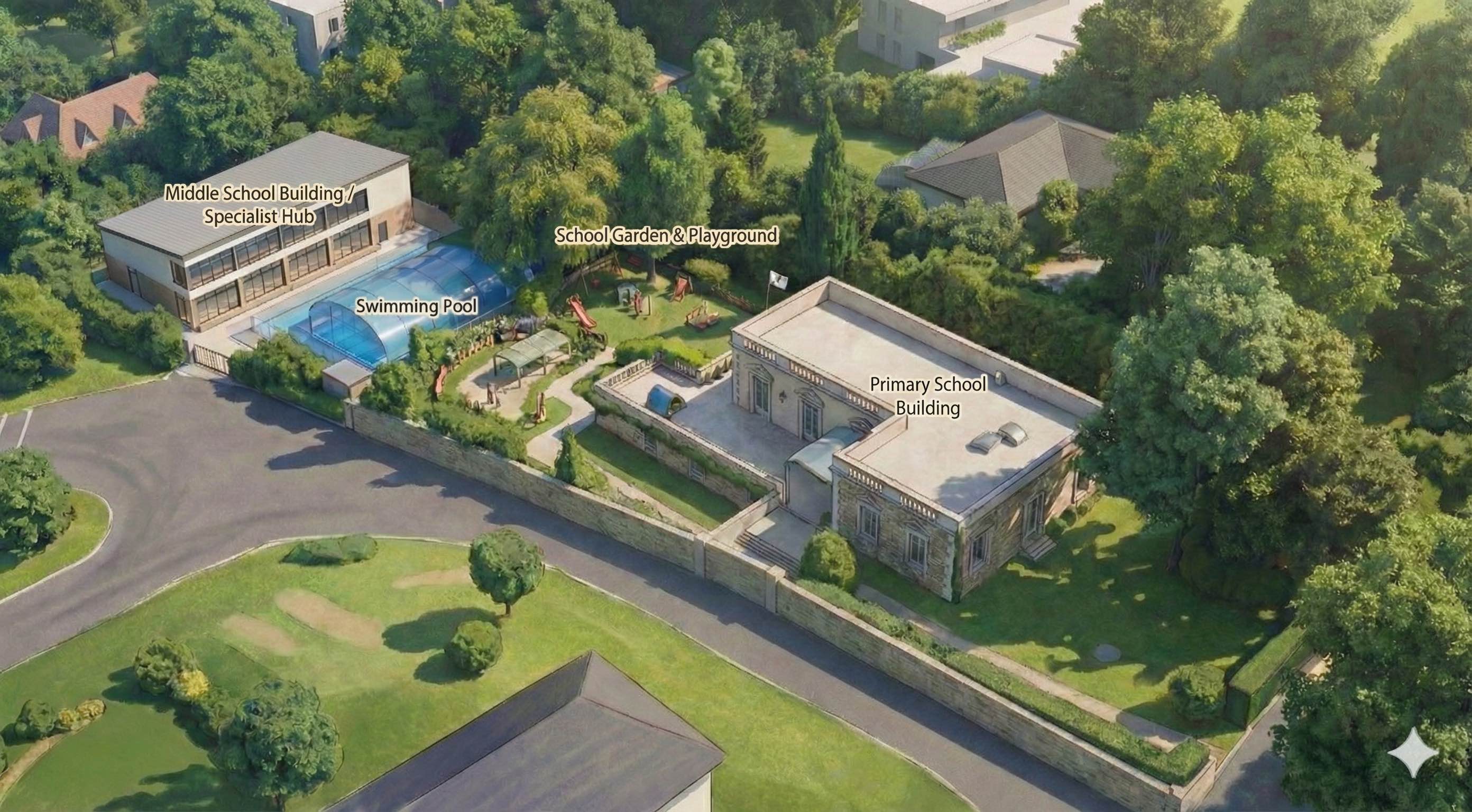
Forest International School Paris in Mareil-Marly, west of Paris.
For a forest school or nature-based international school, the outdoor space should be more than scenery. Ask where children go outside, how often, what changes in winter, what clothing is expected and how teachers connect outdoor experiences back to reading, writing, science or creative work.
Our campus sits in Mareil-Marly, near Saint-Germain-en-Laye. Families who visit can see the relationship between the indoor classrooms and the outdoor environment, including the forest and gardens that form part of daily learning.
This is also the moment to test whether the location works for your family. Search routes from your home, office or future neighbourhood before the visit. Then ask the school about arrival, pick-up and any transport options that may apply to your address.
Check the practical details before you fall in love with the school
Parents often know within minutes whether a school feels right. The practical questions still matter.
Before or during the visit, check:
- The age group your child would enter
- Whether applications are open for your timing
- The documents needed for an application
- Published annual fees and any optional extras
- Lunch, after-school and transport options
- How quickly the admissions team can advise on availability
- Whether a second visit, trial day or follow-up conversation is possible
Forest’s admissions page explains that applications can be submitted throughout the school year and that families can arrange an in-person visit, virtual meeting or Open Day. Fees are published separately so families can review tuition before making a decision.
When a camp is a useful first step
If your child is nervous about joining a new school, a holiday programme can make the campus familiar before a school application. Forest’s holiday camps are English-language camps on the same Mareil-Marly campus and are open to children whether or not they attend Forest during the school year.
A camp is not a substitute for an admissions visit, but it can help a child experience the adults, the grounds and the rhythm of learning outdoors. For families searching for summer camp in Paris as well as a school place, that first low-pressure experience can be helpful.
What to write down after the visit
After visiting more than one international school, details blur quickly. Keep your notes simple:
- How did my child respond to the adults and environment?
- Did the school explain the curriculum clearly?
- Could I picture the school day from arrival to pick-up?
- Were fees, admissions steps and availability clear?
- Did the school answer the questions specific to my family?
- What concern still needs a follow-up answer?
If a school avoids practical answers, that matters. If a school is honest about what it can and cannot offer, that also matters. The right choice is rarely made from one impressive feature; it comes from the whole fit between child, family and school.
FAQ
Is Forest International School Paris actually in Paris?
Forest International School Paris is west of Paris in Mareil-Marly, near Saint-Germain-en-Laye. Many families looking for an international school in Paris also consider schools in western Ile-de-France because the campus, commute and school environment can be a better fit than a central Paris location.
What ages does Forest International School Paris teach?
The school offers Early Years for ages 2-5, Primary for ages 6-11 and Middle School for ages 11-15. If your child is near a transition point, ask admissions which group is the right fit.
Can we visit before applying?
Yes. Families can arrange a school visit through contact, and the admissions process also refers to in-person visits, virtual meetings and Open Days. A visit is the best way to understand whether the school is right for your child.
Where can I find tuition fees?
Current annual tuition fees, payment information and optional extras are published on the tuition page. Review fees before applying so the conversation with admissions can focus on fit, timing and your child’s needs.
Does the school teach French as well as English?
Yes. Forest is an English-language international school and French is part of the programme. During a visit, tell the team whether your child is a native French speaker, new to French or new to English, so they can discuss the right support.
Is a holiday camp a good way to try the school?
It can be. Holiday camps are open to children who do not attend Forest during the school year, so they can be a useful first experience of the campus and nature-based approach before a family starts a school application.
Next step
If you are comparing international schools in Paris or west of Paris, start with the practical questions above, then come and see the school in person. You can read the admissions steps or book a visit with Forest International School Paris.